



Space Science News home |
|
![]() |
|
|
Baseball would be a whole different
game on Mars. McGwire would have bagged the home run record several
times this season, and the scores for every game would be in
multiple digits. A bunch of outfielders would be in the hospital,
nursing broken arms, too. |
How easy would it be to score on Mars? A couple of important
differences would change the game. Mars itself is only 11% as
massive as the Earth, and is a lot smaller, just 6,788 km (4,216
mi) in diameter - 53% that of Earth. These differences in size
and mass mean that the surface gravity on Mars is only 38% that
of Earth. Therefore, a ball hit on Mars would sail nearly 3 times
farther than the same ball hit on Earth, simply because of Mar's
reduced gravity. The table below shows how the
stats of Mark McGwire, Sammy Sosa, and Ken Griffey Jr. would
change if they played on the Red Planet. In a normal, Earthling-sized
ballpark on Mars every hit, even "singles", would rocket
out of the park. All three players would have eclipsed Maris's
record of 61 homers long ago. Interestingly, among the three
players listed Mark McGwire does not lead the home run race on
Mars -- Sammy Sosa is in the lead. That's because Mars's lower
gravity favors hitters over sluggers. |
"Hey, guys - Is that the pitcher's mound back there?" Boeing artist Jack Olsen rendered this impression of the first manned mission to Mars with Olympus Mons - larger than Mount Everest - in the background. |
| EARTH | MARS | |||||||||
|---|---|---|---|---|---|---|---|---|---|---|
| Player |
Weight |
Hits |
2B |
3B |
HR |
Weight |
Hits |
2B |
3B |
HR |
| M. McGwire | 250 lb | 130 | 19 | 0 | 59 | 95 | 130 | 0 | 0 | 130 |
| S. Sosa | 200 lb | 171 | 19 | 0 | 56 | 76 | 171 | 0 | 0 | 171 |
| K. Griffey, Jr. | 205 lb | 158 | 29 | 3 | 47 | 78 | 158 | 0 | 0 | 158 |
| But something else makes almost as big a difference as gravity: aerodynamic drag. Remember how the earliest computers were made to calculate artillery shell trajectories during World War II? It sounds like a simple task. The shell comes out of the muzzle at certain speed, rises, falls, and there it hits. Except that the atmosphere immediately starts dragging on the shell, so the last half of the trajectory winds up like an belly flop compared to the graceful arc it had at the beginning of its flight. |
|
|
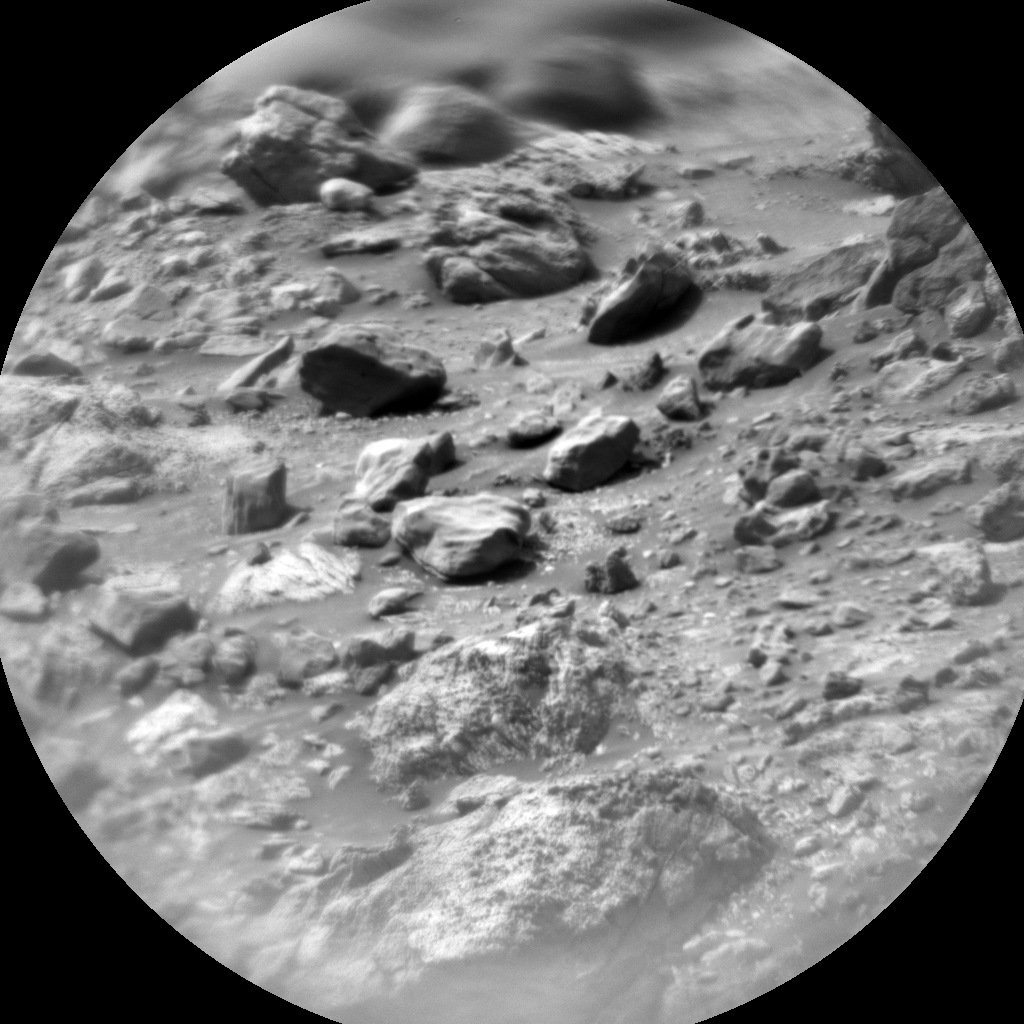
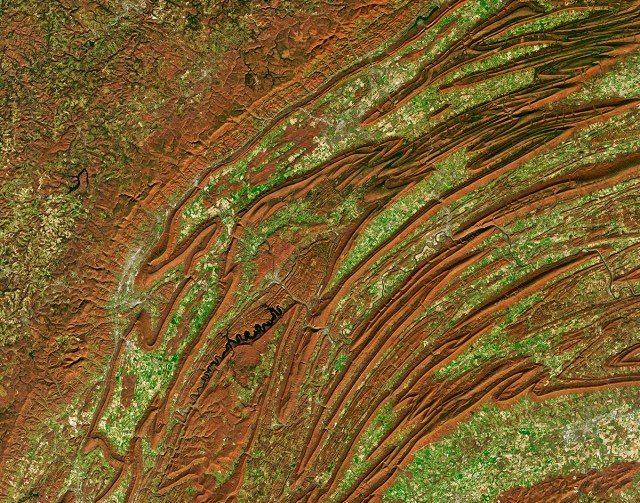
A good place for McGwire to set a world record? Located at 14.7° S, 184.5° W, Gusev Crater is a large, ancient, meteor impact basin about 150 km (93 mi) across) After it formed it was apparently breached by water in Ma'adim Vallis. The possibility that water flowed into Gusev Crater and formed a lake has led to the suggestion that the materials seen on the floor of this crater - smooth deposits, buried craters, and huge mesas near the mouth of Ma'adim Vallis--are composed of sediment that eroded out of the highlands to the south of Gusev Crater. NASA's Exobiology Program Office cites Gusev Crater as a possible priority site for future Mars exploration because it might once have been a lake. This image was taken by Mars Global Surveyor. |
The same thing happens to baseballs, footballs - anything you throw through the air. The results vary with the speed, the angle of ascent, and the aerodynamics of the ball (that's why golf balls have dimples - it helps them fly farther). All that changes on Mars. The air pressure on the Red Planet is only about 0.2 inches of mercury at sea level, nearly 150 times less than that on Earth. With virtually no atmosphere to drag on the ball, its trajectory at the end of its flight will be pretty much what it was when it left the bat. And that alone might guarantee a home run record every inning. Outfielders count on the ball dropping a little more vertically when it arrives on Earth. On Mars, line drives and fly balls alike would be fearsome things, pretty much like standing in front of the batter and catching the ball the instant it left the bat. Ouch. And pitchers will no longer be stars. Without aerodynamics that make sinkers, sliders, and curves possible, all they can throw are straight pitches. Indulging this fancy for a bit longer, how would you set up a ball field? It's going to be big. The balls will fly three times as far as on Earth (pop flies, going three times higher, might require air traffic clearance). The back fence better be three times as tall, too, or the outfielders might become high jumpers and find themselves in the parking lot when they try to snag the ball. |
|
If McGwire does get to play ball on Mars, he won't be the first space athlete. Alan Shepard (right) claimed that in 1971 when he fitted a golf club to a lunar tool and drove golf ball near the end of his last space walk on the Apollo 14 mission. Most of the dust on Mars is probably pretty jagged from millennia of being blown around the dry planet. Smooth grains come from erosion in rivers; Mars lost those a few hundred million years ago. (The problem is not unheard of. Saudi Arabia actually imported sand from the United States because our beach sand is smoother than theirs.) Ragged sand grinding against the players' spacesuits will be downright expensive. They'll have to change suits every game, perhaps more often. Indoor baseball? We've built domes here on Earth, so why not on Mars? The stadium will be immense, even by Texan standards, to accommodate a backfield almost a quarter mile out. Construction on the Red Planet will be at a premium, so the stadium will have to double as the colonists' recreational area and perhaps as part of the agricultural system to feed them. hmmm. Plant some corn and - well, if you build it .... |
|
|
|
More Space Science Headlines - NASA research on the web NASA's Office of Space Science press releases and other news related to NASA and astrophysics |
More Feature Storiesreturn to Space Science News Home Authors: Dave
Dooling and Tony
Phillips |